

Please Note: The following is an experience report only and should not be construed as medical advice. Please consult with medical professionals about any weight loss regimen.
This time last year, I was deeply unhappy with my body. I was significantly overweight, having given into the idea that it was futile, that I would always hit a point where I’d give in and just gain the weight anyway, so why try? But then my wife — then girlfriend — started working out consistently. It was inspiring, and we started going to the gym together a lot. I got into doing both cardio and resistance training, and, though building the habit felt like a slog, I reached a point where it just felt natural. The mental hurdle felt much smaller.
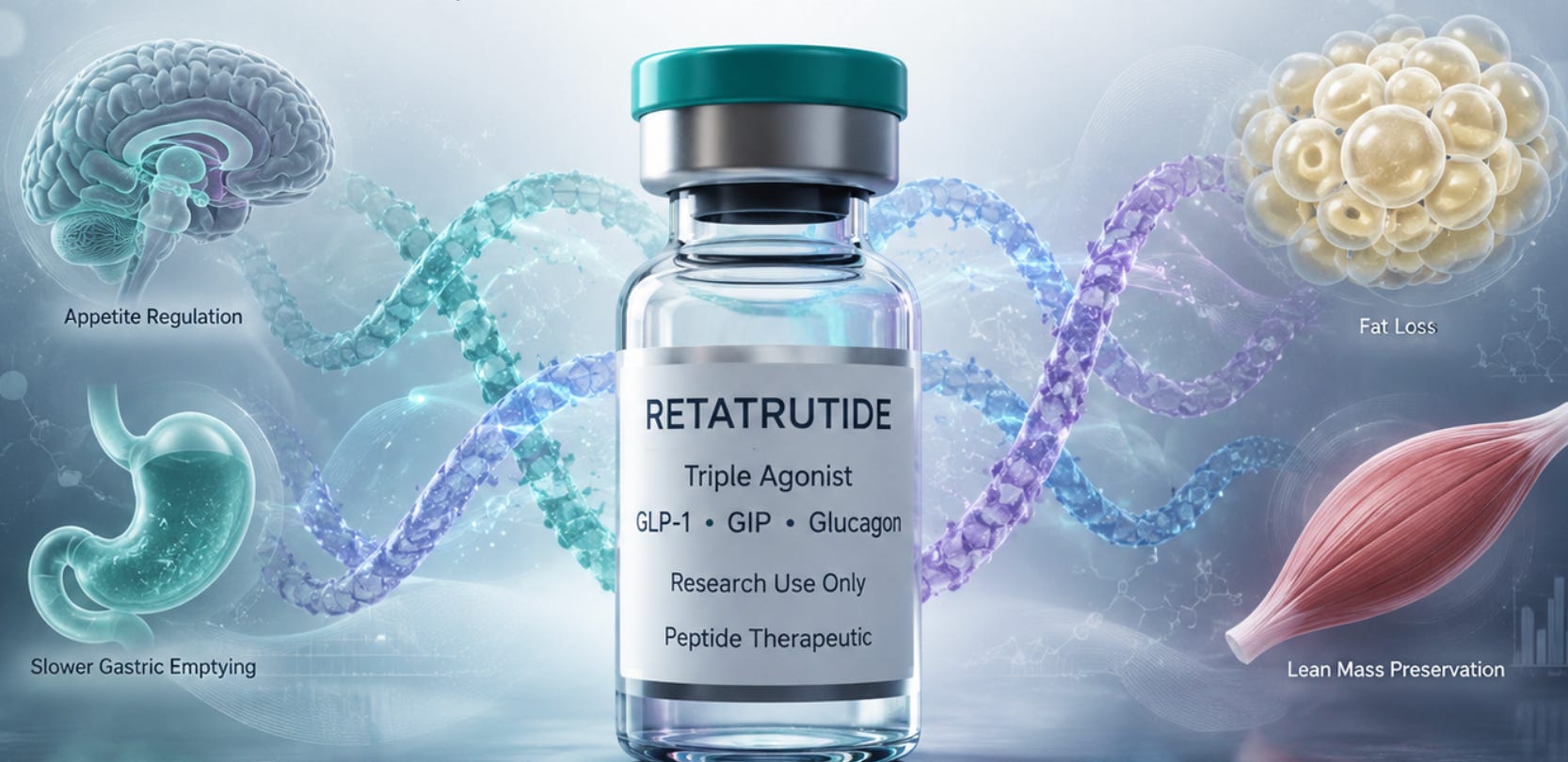
I went from 240 lbs to just over 200 lbs. The progress felt incredible. But then I stalled. The number just slightly fluctuated for weeks. I’d already cultivated a fascination with peptides and, of course, heard about so many success stories with Ozempic. However, given I was already looking into other peptides difficult to get through the mainstream medical system, my eyes turned to retatrutide, a newer peptide that promises more potent weight loss effects than semaglutide (Ozempic) or tirzepatide (Zepbound).
Rather than simply regulate the digestive system to make you feel full faster and keep food in your stomach longer, retatrutide also slightly speeds up your metabolism, so even without additional physical activity, you burn more calories than you would otherwise. Though predicted to receive FDA approval in 2027, it’s not yet prescribed in American pharmacies, despite human trials showing it to be the fastest and most effective weight loss peptide tested yet.
Initially, in March, I started with a weekly dose of 0.5mg injected subcutaneously, working up slowly to 3mg. The first couple of weeks, the effect was subtle. I noticed I had way fewer cravings for food, though I still had quite the appetite. Soon after, my appetite became noticeably reduced, though more strongly in the first half of the week, wearing off a bit as the week progressed. At times, food became nauseating to even think about, though, and I had to force myself to push through it to get more calories.
The weight started to melt off faster than ever before, plummeting it down to where it is currently about four-and-a-half months later, 156, a over eighty pounds since the summer before. At six feet tall, that leaves me genuinely skinny. Some of that came from hard work at the gym, which I continued dutifully after starting retatrutide. Some people experience significant amounts of muscle loss on GLP-1 peptides, so, if anything, it felt more important than ever to stay active.
At this point, I’ve tapered back to 2mg, eager to minimize side effects while I settle into an ideal weight that now is close. Though I feel like I have more capacity to eat back, the effects are quite significant, and I still often find myself going out of my way to get extra calories to make sure I don’t have too sharp a caloric deficit, especially since I did find myself plateauing at the gym.
To call this worth it would be an understatement. I’m blessed to have fairly wide hips for a trans woman, and all this weight loss greatly brought in my waist, leaving me at a point where I have now teared up multiple times because of how I feel at home in my body in a way that felt out of reach before. The past couple of weeks, this has sparked a substantial and seemingly sustainable confidence boost. I don’t dread seeing my reflection — I’m excited for it.
It’s easy to dismiss the benefits to losing weight not pertaining to physical health as vanity, but in a world that is often shallow, there is something deeply relieving about shutting off the anxious voice in your head saying you’re being judged. People may say that folks who take GLP-1s do it to please society’s gaze, but for me, it’s about my own gaze, being able to look in the mirror and see a woman who is confident and cute and capable.
At this point, I consider it as important a decision for my mental well-being and self-confidence as starting hormone replacement therapy so many years ago. It’s one thing to stop gender dysphoria, it’s another altogether to be able to feel truly great about yourself, even if it requires doing hard things like building sustainable gym habits. And it is unquestionable that retatrutide contributed massively to this breakthrough.